Introduction
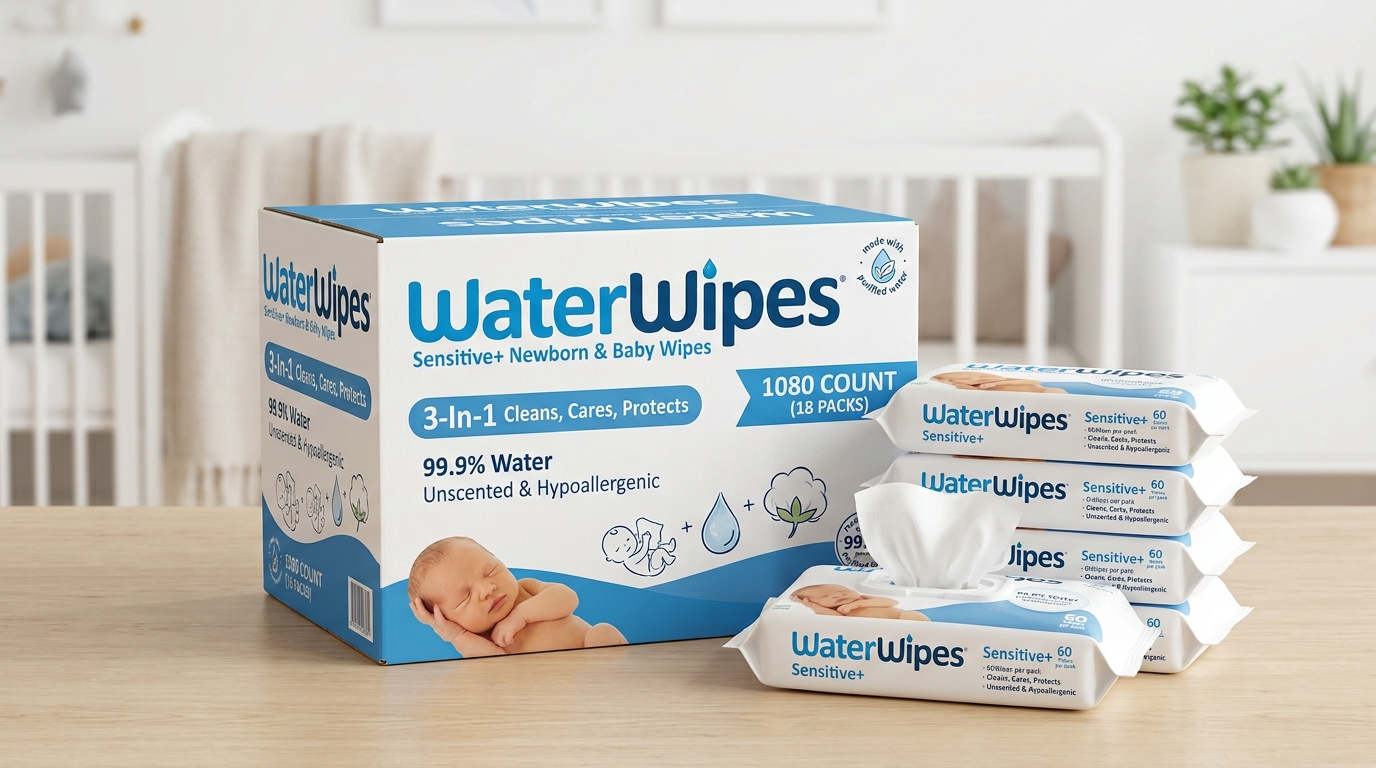
For parents of newborns in particular, the ingredients used in everyday products like baby wipes often become a more closely considered detail, given how frequently these products come into contact with a baby’s skin. WaterWipes Sensitive+ Newborn & Baby Wipes are built around a formulation described as 99.9% water, positioned as a 3-in-1 product that cleans, cares for, and protects skin, while being unscented and hypoallergenic. This particular listing includes a large 1,080-count supply, broken into 18 individual packs.
This article takes a closer look at what these wipes typically offer, the different ways they tend to be used in daily care routines, who they’re generally best suited for, and a few practical points worth thinking through before choosing this type of water-based wipe product.
Key Features
99.9% Water-Based Formulation
The defining characteristic of this product is its water-based composition, described as 99.9% water. This kind of formulation is generally marketed around minimizing the number of additional ingredients that come into contact with a baby’s skin, compared to wipes that rely more heavily on additional cleansing agents or fragrances.
3-in-1 Cleans, Cares, Protects Positioning
The product is described as offering three combined functions: cleaning, caring for, and protecting skin. This kind of positioning is generally meant to convey that the wipes are intended to do more than basic surface cleaning, aiming to also support the skin’s condition during regular use.
Unscented Formulation
These wipes are specifically marketed as unscented, which is a detail some parents look for specifically to avoid added fragrance ingredients, particularly for newborns or those with more sensitive skin.
Hypoallergenic Labeling
The hypoallergenic label generally indicates the product has been formulated or tested with the intention of reducing the likelihood of allergic reactions, though as with any hypoallergenic claim, individual sensitivities can still vary from person to person.
Large 1,080-Count Supply Across 18 Packs
Rather than a single bulk container, this listing is broken into 18 individual packs totaling 1,080 wipes. This kind of multi-pack format can offer some added convenience, allowing individual packs to be distributed across different locations, such as a diaper bag, nursery, and car, rather than relying on a single large container.
Designed with Newborns in Mind
While marketed as suitable for babies generally, this particular product line places specific emphasis on newborn use, suggesting a formulation intended to be gentle enough for very young or more sensitive skin.
How It Can Be Used
Given their water-based formulation and multi-pack packaging, these wipes tend to be used across a number of common newborn and infant care situations.
Newborn diaper changes. Given the product’s specific newborn positioning, one of the most common uses is for gentle cleaning during diaper changes in the earliest stages of a baby’s life, when skin sensitivity is often a particular concern for parents.
General diaper changes as a child grows. Beyond the newborn stage, these wipes generally continue to be used for regular diaper changes throughout early childhood.
Face and hand cleanup. Due to their gentle, water-based formulation, some parents also use these wipes for cleaning a baby’s face or hands, particularly after feeding or during general care routines.
Distributing packs across locations. Because this listing includes 18 individual packs rather than one large container, parents often distribute individual packs across different locations, such as keeping one in a diaper bag, one in the nursery, and one in a car, for convenient access wherever needed.
Travel and outings. The individual pack format also makes it convenient to bring a single pack along for shorter outings, without needing to carry a bulkier, single large container.
Who It May Be Suitable For
This type of product tends to appeal to a fairly specific range of parents and caregivers, including:
- Parents of newborns who are specifically looking for a gentle, minimal-ingredient wipe option for very young or sensitive skin.
- Those managing skin sensitivities, given the unscented and hypoallergenic labeling, which may be a priority for babies prone to skin irritation.
- Households that prefer minimal-ingredient products generally, given the emphasis on a water-based formulation over more heavily processed alternatives.
- Parents who value multi-pack convenience, given the 18-pack format that allows wipes to be distributed across multiple locations rather than relying on one central supply.
- Families with consistent, ongoing wipe needs, given the large overall 1,080-count supply included in this particular listing.
On the other hand, those looking for wipes marketed with added scent options or those who don’t have specific sensitivity concerns might consider a broader range of standard baby wipe products rather than specifically seeking out a water-based, hypoallergenic formulation.
Important Things to Consider
Before choosing this type of product, a few practical points are worth thinking through.
Storage for a large multi-pack supply. With 18 individual packs, it’s worth considering available storage space, both for keeping a full supply at home and for distributing individual packs to different locations as needed.
Water-based formulations and moisture content. Because these wipes rely so heavily on a water-based composition, it’s generally advisable to store them properly and use them within any recommended timeframe after opening, since moisture content can affect wipe performance and freshness over time.
Individual skin sensitivity still varies. While hypoallergenic and unscented labeling generally indicates a gentler formulation, individual reactions can still vary, so it’s worth monitoring a baby’s skin when introducing any new wipe product for the first time.
Cost per wipe considerations. Water-based, minimal-ingredient wipe products are sometimes positioned at a different price point compared to standard wipes, so it’s worth weighing the overall value of the 1,080-count package against typical usage needs.
Packaging convenience versus single large containers. The 18-pack format offers distribution flexibility, though some parents may prefer a single large container instead, depending on personal storage and usage preferences.
Comparison of General Categories
Baby wipes as a broader product category can generally be grouped a few different ways.
Standard baby wipes typically include a broader range of ingredients beyond water, often incorporating additional cleansing agents, moisturizers, or mild fragrances.
Water-based or minimal-ingredient wipes, like WaterWipes Sensitive+, are formulated with a much higher water content and fewer additional ingredients, generally marketed toward parents specifically seeking a gentler, simpler formulation.
Scented versus unscented wipes represent another distinction within the category, with unscented options generally chosen by parents looking to minimize fragrance exposure for sensitive skin.
Single large containers versus multi-pack formats also vary across the category, with some products sold as one large bulk container and others, like this listing, broken into multiple smaller packs for added distribution flexibility.
Choosing between these categories generally comes down to specific skin sensitivity considerations, ingredient preferences, and how a household prefers to store and distribute its wipe supply.
Frequently Asked Questions
What does a 99.9% water-based formulation actually mean? This generally indicates that the wipes are composed almost entirely of water, with a very small percentage of additional ingredients, as opposed to standard wipes that may rely more heavily on other cleansing or moisturizing agents.
Is hypoallergenic labeling a guarantee against skin reactions? Hypoallergenic labeling generally indicates a product has been formulated or tested with the goal of reducing the likelihood of allergic reactions, though it is not an absolute guarantee, since individual skin sensitivities can still vary from person to person.
Why are these wipes sold in 18 separate packs instead of one large container? This kind of multi-pack format is generally intended to offer distribution flexibility, allowing individual packs to be kept in different locations, such as a diaper bag, nursery, or car, rather than relying on a single large supply.
Are these wipes suitable for use beyond the newborn stage? While specifically marketed with newborns in mind, water-based, unscented wipes like this are generally suitable for continued use as a child grows, particularly for parents who prefer to stick with a minimal-ingredient formulation.
How should water-based wipes be stored to maintain freshness? Water-based wipes generally benefit from being stored in a sealed container or resealed pack to help retain moisture, since this type of formulation can dry out more quickly if left exposed to air compared to wipes with additional ingredients.
Can these wipes be used for tasks other than diaper changes? Many parents do use gentle, water-based wipes like this for face and hand cleanup, given their minimal-ingredient formulation, though they are primarily marketed and formulated with diaper changes and general infant skin care in mind.
Conclusion
WaterWipes Sensitive+ Newborn & Baby Wipes offer a water-based, minimal-ingredient approach to infant skin care, combining an unscented, hypoallergenic formulation with a large 1,080-count supply spread across 18 individual packs. For parents of newborns or those managing specific skin sensitivities, this type of product presents a fairly focused option built around simplicity in ingredients.
At the same time, the multi-pack format and overall supply size are best suited to households with consistent, ongoing wipe needs, and it’s worth weighing the water-based formulation against personal preferences and any specific sensitivity considerations within a family. As with most infant care products, the right choice ultimately depends on individual skin needs, storage preferences, and typical usage habits.